
Communication Skills Course for Men
You don’t need to be told to “open up more.” You need a practical set of skills for what to do when conversations get hard.
This is a psychologist-led communication skills course built specifically for men. It focuses on the moments where communication most often breaks down — shutdown, defensiveness, escalation — and gives you clear, workable tools to respond differently.
Why Communication Feels So Hard for Men
Most men who struggle with communication aren’t failing because they don’t care. They’re struggling because the tools they’ve been given — “listen more,” “be vulnerable,” “use I statements” — don’t account for what actually happens in the body and mind during a charged conversation.

When Conversations Feel Like Criticism
For many men, a difficult conversation doesn’t feel like an opportunity for connection. It feels like an accusation. The moment a partner raises something that’s bothering them, the message that lands — even if it wasn’t intended — is: you’ve done something wrong.
When the brain registers threat, the capacity to listen clearly, respond thoughtfully, and stay regulated drops significantly. What follows is a predictable set of responses: defend, attack, withdraw, or comply without understanding.
None of those responses fix the problem. Most of them make it worse.

Why Men Go Blank, Shut Down, or Get Defensive
What’s often happening during these moments is emotional flooding — a state where the nervous system is overwhelmed and higher-order thinking becomes difficult. Men in this state don’t shut down because they don’t care. They shut down because the system has been overloaded.
The problem is that shutdown and defensiveness — while understandable — communicate to a partner that they aren’t being heard, that their concerns don’t matter, or that you’re more interested in winning than in understanding. That creates a cycle. The more a partner feels unheard, the harder they push. The harder they push, the more overwhelmed you become.

Why Knowing What to Say Is Harder Under Pressure
Most men can communicate clearly and directly in low-stakes situations. The difficulty isn’t communication in general — it’s communication under emotional pressure. When the stakes feel high, clarity disappears. You either say nothing, say something you don’t mean, or say the right thing in completely the wrong way.
This is not a character flaw. It is a skills gap — and skills can be learned.
Who This Course Is Designed For
This course is built for men in real situations, not theoretical ones. It will be most useful for you if you recognise yourself in any of the following:
Are you noticing these repeated patterns
- Your partner says you don't listen, don't communicate, or don't understand them
- You go blank, shut down, or get defensive during difficult conversations
- You try to fix problems and make things worse
- You want practical tools, not emotional advice
- You're not ready for couples counselling but know something needs to change
- You want to understand what's driving your patterns and build better ones
You don’t need experience with therapy or self-development. You don’t need an existing emotional vocabulary. You need a willingness to be honest about how you currently communicate and to practise something different.
Communication Skills Course for Men
The Three Patterns That Break Down Relationship Communication
Understanding your dominant pattern is the first step toward changing it.
Pattern 1: Shutdown and Withdrawal
You go silent. You leave. You stop responding. From the inside, this feels like self-protection — removing yourself before things escalate further. From your partner’s perspective, it looks like abandonment, indifference, or dismissal.
Shutdown doesn’t end the conflict. It pauses it while the underlying problem gets bigger.
Pattern 2: Defensiveness and Counter-Attack
You hear criticism and immediately explain, justify, counter-argue, or turn the focus back on your partner. This feels rational — you’re correcting something inaccurate, or pointing out that they do the same thing. But defensiveness consistently blocks your partner’s ability to feel heard, which is almost always the first thing that needs to happen before any problem gets resolved.
Pattern 3: Fixing, Explaining, or Minimising Too Quickly
You want to solve the problem. You give advice when your partner just needed you to listen. You point out that things aren’t as bad as they seem. You provide context or logic when what was needed was acknowledgement.
This pattern comes from a good place — you genuinely want to help — but it consistently lands as dismissal, because it skips over the emotional experience that needed to be recognised first.
Communication Skills Course for Men
What Real Communication Skills Look Like
Real communication skills for men aren't about speaking more, being softer, or learning to cry. They're about having the capacity to stay functional in conversations that matter — to listen properly, say what you mean, and repair what breaks.
Listening without preparing your defence
The ability to hear what your partner is saying — actually hear it, not just wait for your turn to respond — without immediately scanning for inaccuracies, unfairness, or ammunition. This is a trainable skill.
Saying what is true without attacking
Knowing how to name what is happening inside you — frustration, overwhelm, confusion, hurt — and express it in a way that opens the conversation rather than shutting it down. This is not about performing vulnerability. It is about being precise.

Staying regulated when emotions rise
The ability to remain in a conversation that is getting heated without flooding, shutting down, or escalating. Regulation is the foundation that all other communication skills depend on.

Repairing after conflict
Understanding what repair actually is — not just an apology, but a set of specific behaviours that rebuild trust and demonstrate you understood what happened. Repair is a skill set, not an instinct.
Turning insight into repeated behaviour
Understanding why you communicate the way you do is useful. Changing how you communicate under pressure requires practice — deliberate repetition in real situations until the new response becomes more automatic than the old one.
Intimacy, Connection, and Emotional Distance
Emotional distance builds slowly. By the time most men notice it, the gap has been growing for a while. Rebuilding intimacy and connection is not about grand gestures — it is about understanding what created the distance, and making consistent changes that close it. This includes the defensive patterns and withdrawal behaviours that push partners away.
What the Course Covers
This course is part of the broader Relationship Communication Course for Men, structured to give men a clear, practical pathway through the communication skills that matter most in relationships.
Frameworks used in the course:
Cognitive Behavioural Therapy (CBT): Identifying thinking patterns that fuel defensiveness.
Acceptance and Commitment Therapy (ACT): Responding from values rather than reactivity.
Emotional Regulation: Managing emotions and the nervous system before communication breaks down.
Attachment-Informed Communication: Understanding how early patterns shape current relationship dynamics.
Core elements of Communication Skills Course for Men
The course is structured across six modules, each building on the last.
01
Understanding Your Communication Pattern
Understanding your dominant communication pattern under pressure
02
Emotional Regulation Before Communication
Managing your emotional reactions before it drives your behaviour and communication.
03
Listening Without Defending
Listening and validation skills that work in moments of tension, conflict and arguments.
04
Saying What You Actually Mean
Assertive communication — saying what you mean without attacking or capitulating.
05
Repairing Conflict Properly
Conflict repair: what it is, how it works, and how to make it count
06
Attachment-Informed Communication
Understanding how early patterns shape current relationship dynamics
How This Is Different from Therapy
There’s no shortage of performance psychology advice online. What’s harder to find is evidence-based support that helps you perform under pressure, recover from setbacks, build genuine confidence, and stay consistent when it matters most — delivered by a psychologist who understands both performance and the realities of being a man.
Skills-Focused and Practical
This course is not therapy. There is no open-ended exploration, no requirement to discuss your childhood, and no assumption that talking about feelings is the goal in itself. The focus is on specific, applied skills — what to do in a real conversation, under real pressure.
Designed Specifically for Men
The content accounts for how men tend to experience conflict, what common male communication patterns look like, and what kinds of tools are most likely to be used consistently by men who prefer structure and practical application.

A Useful First Step or Therapy Companion
Some men complete this course as a stand-alone skill-building exercise. Others use it alongside individual sessions with a psychologist. If your situation involves complex patterns, longstanding conflict, or significant mental health concerns, one-on-one men’s relationship counselling online may be a better fit or a useful addition.

When Therapy May Still Be Needed
If communication breakdown is connected to significant anger, trauma, depression, or anxiety — or if your relationship is at a crisis point — a course alone may not be sufficient. In those cases, explore online psychology for men Australia for individual support.
Your Psychologist
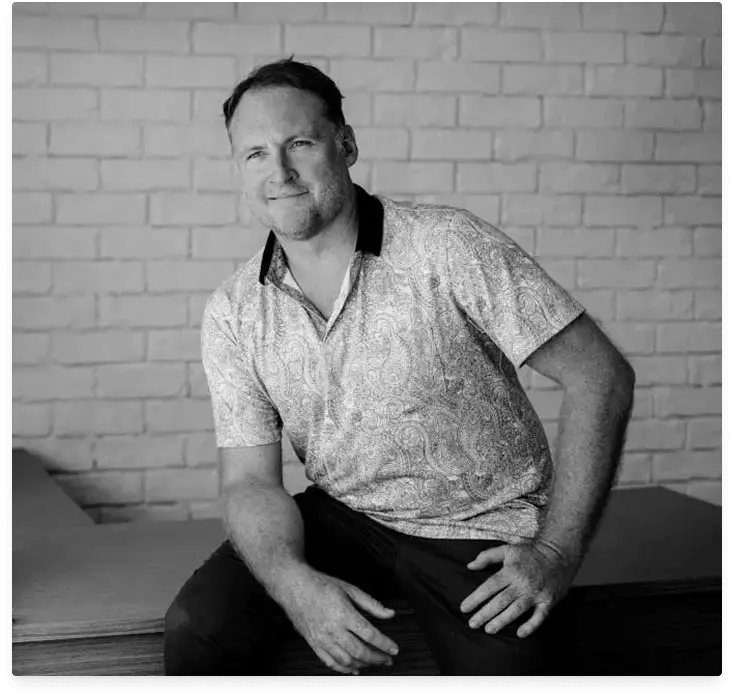
Clayton J Kuzma
I’m a psychologist focused in men’s mental health, relationships, and performance. Over the past decade, I’ve worked with thousands of men through individual sessions and structured programs—helping them manage stress, anger, anxiety, and relationship challenges.
My approach is practical, structured, and outcome-focused. This isn’t just about insight—it’s about developing the skills to think clearly, respond effectively, and lead your life with intention.
Alongside my clinical training, my background as a tradesman, complementary health practitioner, partner, father and sports coach, gives me a grounded, real-world understanding of the pressures men face.
Credentials
- Registered Psychologist (AHPRA)
- Masters of Professional Psychology (USC)
- Bachelor of Psychology (Honors) Griffith University
- Member of the Australian Association Of Psychologist (AAPI)
- 10+ years focused in men's mental health
- Trained in ACT, CBT, + other modelities
- Football Australia Coach (Cont. Education Diploma C)
Clayton Kuzma — Psychology For Men – Registered psychologist. Sunshine Coast and Maroochydore clinic. Online sessions available Australia-wide.
Getting Started
How to Get Started
01
Course Enquiry
Complete a booking enquiry or call 07 5221 5842
02
Purchase The Course
Purchase the course
03
Recieve the login deatils
All your login details and instructions will be emailed to you.
04
Start the course
Begin from the start of work through progressively.
05
Reach out if you need help
Start your path toward change.
Getting started is straightforward. No lengthy intake forms. No waiting weeks for an appointment. Just a clear pathway about what you're dealing with and how we can help you change.
FAQ
Frequently Asked Questions
Frequently Asked Questions
What does a communication skills course for men include?
The course covers understanding your communication pattern, managing emotional flooding, listening and validation skills, assertive communication, conflict repair, and building sustainable habits. It’s structured, practical, and built specifically around the situations men most commonly find difficult.
Is this course only for men in relationships?
The primary focus is relationship communication, but the skills apply anywhere communication matters — with a partner, family members, or in high-pressure work situations. Most men who complete the course report improvements across multiple areas of their life.
Can this help if I shut down during arguments?
Yes. Emotional shutdown is one of the three patterns this course addresses directly. The course explains what causes shutdown physiologically and provides specific tools to stay present in conversations that would otherwise trigger withdrawal.
Can this help if I get defensive?
Yes. Defensiveness is addressed in detail — where it comes from, why it backfires, and what to do instead. Understanding why defensiveness doesn’t work is the first step. Building a reliable alternative response is what the course focuses on.
Can this help if I shut down during arguments?
Yes. This course is individual and self-paced. Couples counselling involves both partners working with a therapist. This course focuses entirely on your communication patterns and gives you tools you can apply independently.
Can this help if I get defensive or angry?
Yes. Defensiveness and reactive anger are closely related to the emotional flooding and pattern-based responses this course addresses directly. If anger is a more significant concern, you may also benefit from the Online Anger Management Course for Men.
Is this different from couples counselling?
Yes. The course is fully online and accessible from anywhere in Australia. There is no need to attend in person.
Is the course online?
Yes. The course is fully online and available from anywhere in Australia. You access it on your own schedule, from any device.
Is the course led by a psychologist?
Yes. The course was built by Clayton Kuzma, an AHPRA-registered psychologist at Psychology For Men, Sunshine Coast. It is not a coaching program or generic self-help resource — it is clinically informed and evidence-based.
Do I need to talk about my childhood?
No. The course is forward-focused. While understanding where patterns come from can be useful context, the emphasis is on building new responses — not re-examining history for its own sake.
Can my partner be involved?
This course is designed for individual completion. If both partners want support, couples counselling or the full Relationship Communication Course for Men may be a better fit.
How do I enrol or learn more?
Use the enquiry form on this page or contact Psychology For Men directly. We’ll answer any questions you have and confirm your enrolment.
Service Area
Communication Skills Course for Men
In-person: Maroochydore, Sunshine Coast — serving Buderim, Mooloolaba, Caloundra, Noosa, Birtinya, and surrounding areas.
Online: Available to men and athletes across Queensland and Australia-wide. Performance psychology and sport psychology delivered online — same structure, same outcomes, no geography required.
If you’re considering whether individual support might be a better fit, explore Men’s Relationship Counselling Online or Online Psychology for Men Australia.
Contact Details
Psychology For Men
3/87 Aerodrome Road
Maroochydore, QLD 4558
Ready to Get Started?
Enrol or Learn More
If you’ve read this far, you already know that the way things are currently going isn’t working. Communication problems don’t resolve on their own — they deepen. The same shutdown, the same defensiveness, the same arguments — they continue until something changes.This course gives you the structure and skills to make that shift.
Not ready to enrol yet? and we’ll answer any questions you have before you commit.
Want to explore the full course pathway? View the Full Relationship Communication Course
For individual one-on-one support, see Men’s Relationship Counselling Online or Online Psychology for Men Australia.
Crisis Support: If you are in crisis, please contact Lifeline on 13 11 14 or Beyond Blue on 1300 224 636.