
Men's Relationship Counselling Online
You don’t have to have everything figured out before you make the call. You just have to know that what’s happening now isn’t working.
This is individual online relationship counselling for men, led by an AHPRA-registered psychologist. It’s not couples counselling. It’s direct, practical, one-on-one support focused on your patterns — what’s driving the conflict, the shutdown, or the distance in your relationship, and what you can do about it.
Medicare Rebates
Available
Online Australia
Wide
10+ Years
Experience
- Medicare rebates available
- Online sessions Australia-wide
- Registered psychologist
Who This Service Is For
This service is most appropriate for:
- Men in committed relationships who are experiencing ongoing conflict, emotional distance, or communication breakdown
- Men facing separation or repair decisions who want to understand what's actually happening before making a major choice
- Men whose partner has asked them to seek help — whether that feels fair or not, showing up is meaningful
- Men who are not ready for couples counselling but recognise that something needs to change
- Men who want private, confidential, online support without sitting in a waiting room
This service is also suitable for partners who want to understand what individual counselling for their partner might look like, or who want a referral pathway to suggest.
What Men's Relationship Counselling Is
You don’t need to be in crisis to benefit from counselling. Some men come in when things are deteriorating. Others come when they’ve already recognised a pattern and want to change it before it does more damage.

Individual Support for Relationship Patterns
Men’s relationship counselling at Psychology For Men is individual — it’s one man working with a registered psychologist on his own patterns, skills, and responses. Your partner doesn’t attend. The focus is on you and what you can change.
This is not couples counselling. Couples counselling works differently and has different goals. If couples counselling is what you’re considering, it can be discussed — but it’s a separate service.

Practical Work, Not Blame
The sessions are not designed to build a case against you or deliver a verdict about the relationship. They’re designed to help you understand what’s happening — the dynamics, the cycles, the triggers — and to give you practical tools to act differently.
Most men who come to relationship counselling expecting to be blamed are surprised to find that the work is actually about giving them more capacity and more options, not less.

Understanding Your Role in the Cycle
Every relationship dynamic involves both people. Relationship counselling for men doesn’t ignore that — but it focuses on what you can control. Understanding your role in the cycle is not about taking all the blame. It’s about recognising where your choices, responses, and patterns are contributing to the outcome, and where there is genuine room to change.
Signs Relationship Counselling May Help
You may benefit from men’s relationship counselling if you recognise any of the following:
- You and your partner keep having the same fight with no resolution
- Communication breaks down — it escalates, gets shut down, or never happens
- You avoid difficult conversations because they go nowhere or get worse
- Trust, intimacy, or emotional connection has dropped significantly
- Your partner has expressed that they feel alone, unheard, or close to leaving
- You feel stuck between trying harder and giving up entirely
- A partner, therapist, GP, or family member has suggested you get support
- Separation is on the table and you want to understand your options before making a decision
You don't need to be in crisis to benefit from counselling. Some men come in when things are deteriorating. Others come when they've already recognised a pattern and want to change it before it does more damage.
What We Address
Relationship counselling sessions can work across any of the following areas:
Communication and conflict
Understanding what’s driving the breakdown, developing specific communication skills, learning to de-escalate before damage is done. For a more structured skills-building program, see the Relationship Communication Course for Men or the Communication Skills Course for Men.
Emotional shutdown and avoidance
Understanding why you withdraw, go silent, or disappear from conversations — and developing the capacity to stay present differently.

Anger and defensiveness
Working on the patterns that make conflict dangerous or unproductive. If anger is a primary concern, see also the Online Anger Management Course for Men.

Trust and repair
Working through the aftermath of betrayal, repeated conflict, or accumulated hurt — understanding what repair actually requires and whether it’s possible.
Attachment patterns
Understanding how your early experiences shape how you show up in relationships now — particularly patterns of avoidance, anxiety, or emotional unavailability. For more on this, see Attachment Styles in Men and Relationships.
Stress, work pressure, and relationship strain
Many men find that work stress bleeds directly into relationship irritability and withdrawal. Counselling can address both the external pressures and the relationship impact.
THE APPROACH
The Approach — How This Works
There’s no shortage of performance psychology advice online. What’s harder to find is evidence-based support that helps you perform under pressure, recover from setbacks, build genuine confidence, and stay consistent when it matters most — delivered by a psychologist who understands both performance and the realities of being a man.
Evidence-Based
Sessions use evidence-based frameworks including:
- Cognitive Behavioural Therapy (CBT) — identifying the thought patterns that drive defensive, avoidant, or escalating responses
- Acceptance and Commitment Therapy (ACT) — helping you respond from values rather than reactivity
- Attachment-informed relationship work — understanding how attachment patterns shape your relationship behaviour
- Emotional regulation — building the capacity to stay present and functional when conversations become charged
Skill-Focused
Not just insight — specific skills you practise and apply. Pre-performance routines, attentional cues, confidence frameworks, regulation strategies. You will leave sessions with tools, not just awareness.
Sessions are structured, not open-ended. There is a clear direction from the first session. Progress is measurable. You will have a specific understanding of your performance patterns and concrete strategies to change them.

Practical Between-Session Strategies
Each session includes specific, applied strategies to try in your actual relationship — not just things to think about. The goal is change that shows up in real life, not just insight that stays in the room.

When a Course or Couples Counselling May Be More Suitable
For some men, a structured self-paced course like the Relationship Communication Course for Men is a better or additional fit. For others, couples counselling is what the situation requires. These options can be discussed during your initial session or enquiry.
Your Performance Coach
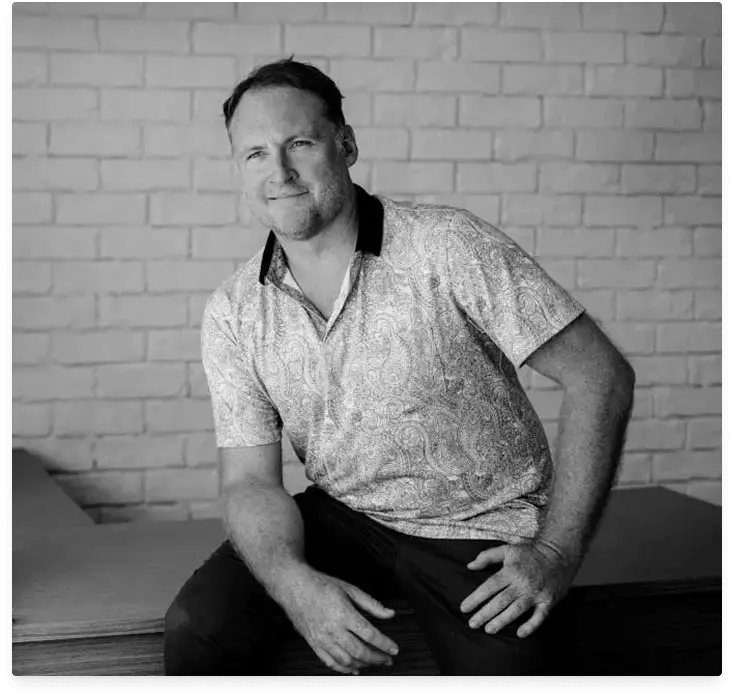
Clayton J Kuzma
I’m a psychologist focused in men’s mental health, relationships, and performance. Over the past decade, I’ve worked with thousands of men through individual sessions and structured programs—helping them manage stress, anger, anxiety, and relationship challenges.
My approach is practical, structured, and outcome-focused. This isn’t just about insight—it’s about developing the skills to think clearly, respond effectively, and lead your life with intention.
Alongside my clinical training, my background as a tradesman, complementary health practitioner, partner, father and sports coach, gives me a grounded, real-world understanding of the pressures men face.
Credentials
- Registered Psychologist (AHPRA)
- Masters of Professional Psychology (USC)
- Bachelor of Psychology (Honors) Griffith University
- Member of the Australian Association Of Psychologist (AAPI)
- 10+ years focused in men's mental health
- Trained in ACT, CBT, + other modelities
- Football Australia Coach (Cont. Education Diploma C)
What often improves
Outcomes vary depending on where you’re starting and how committed you are to applying the work. But here’s what men consistently report after completing this program:
In their relationships
- Having difficult conversations without them turning into arguments
- Partners reporting they feel heard and more connected
- Fewer cycles of shutdown, distance, and resentment
- Conflict that gets resolved — not just suppressed or repeated
- A stronger sense of emotional presence in the relationship
In how they communicate
- Saying what they actually mean — clearly and without aggression
- Staying in the conversation instead of shutting down or walking away
- Responding instead of reacting when criticism or conflict arises
- Knowing how to repair after conflict instead of hoping it blows over
- Communicating under pressure without losing ground or losing themselves
In how they see themselves
- Understanding their own patterns — and having tools to change them
- Less shame after conflict. More self-respect.
- A clear sense of what they want in their relationship — and how to build it
- Confidence that the change is sustainable, not just a temporary reset
Getting Started
How to Get Started
01
Booking Enquiry
Complete a booking enquiry or call 07 5221 5842
02
Book Initial Appointment
Book Directly through the Calander
03
First Session
Discuss your situation and what you want to change.
04
Session Planning
Agree on a session plan and frequency
05
Begin the Change
Start your path toward change.
Getting started is straightforward. No lengthy intake forms. No waiting weeks for an appointment. Just a clear pathway about what you're dealing with and how we can help you change.
FAQ
Frequently Asked Questions
Frequently Asked Questions
Can I do relationship counselling online?
Yes. Online sessions are conducted via secure video call and are available to men anywhere in Australia. Research consistently shows that online psychology is as effective as in-person therapy for most presentations, including relationship and communication issues.
Can I attend relationship counselling without my partner?
Yes. This service is individual — it’s specifically for men working on their own patterns and skills. Your partner does not attend. Many men find individual work more comfortable and more productive than couples counselling, particularly as a starting point.
Is this the same as couples counselling?
No. Couples counselling involves both partners working with a therapist together, with a focus on the relationship system. This service is individual psychology for men. It focuses on your patterns, skills, and responses. It can complement couples counselling, but it’s a separate service.
Will I be blamed for the relationship problems?
No. The sessions are not designed to establish fault. They’re designed to help you understand what’s happening and what you can do about it. Most men are surprised by how practical and forward-focused the work actually is.
Can this help if I shut down during arguments?
Yes. Emotional shutdown is one of the most common patterns addressed in relationship counselling for men. You’ll understand why it happens and develop specific tools to stay more present in conversations that would otherwise trigger withdrawal.
Can this help if anger is affecting my relationship?
Yes. Anger in relationships — including defensiveness, escalation, and intimidation — is commonly worked on in individual sessions. The Online Anger Management Course for Men is also available as a structured complement.
Are Medicare rebates available?
Medicare rebates may be available with a valid GP Mental Health Treatment Plan. Speak with your GP about a referral, or contact us and we can explain the process. Rebates reduce the out-of-pocket cost of sessions significantly.
Do you work with men across Australia?
Yes. Online sessions are available to men anywhere in Australia. The Psychology For Men clinic is based in Maroochydore on the Sunshine Coast, but the service is fully accessible nationally.
Should I choose counselling or the relationship communication course?
Both are valid options depending on your situation. The course is self-paced and skills-focused. Counselling is personalised and responsive to your specific patterns. Some men start with the course; others start with individual sessions; many use both. If you’re unsure, an initial enquiry can help clarify the best fit.
How do I make a booking enquiry?
Use the enquiry form on this page or contact Psychology For Men directly. We’ll respond promptly and can answer any questions before you commit to your first session.
Service Area
Sunshine Coast and Online
In-person: Maroochydore, Sunshine Coast — serving Buderim, Mooloolaba, Caloundra, Noosa, Birtinya, and surrounding areas.
Online: For men outside the Sunshine Coast, Online Psychologist Australia is available nationally. For men on the Sunshine Coast or Maroochydore, in-person sessions may also be available — enquire directly.
Prefer a structured, self-paced option first? Explore the Relationship Communication Course
Contact Details
Psychology For Men
3/87 Aerodrome Road
Maroochydore, QLD 4558
Ready to Get Started?
Ready to Change
If your relationship is under pressure and you’re ready to do something about your part in it — this is where to start.
Individual counselling gives you the understanding, the tools, and the support to show up differently. Not because you’re the only one at fault — but because changing your own patterns is the only thing you can actually control.
Crisis Support: If you are in crisis, please contact Lifeline on 13 11 14 or Beyond Blue on 1300 224 636.