
Emotional Regulation and Communication for men
Emotional regulation is the ability to manage your internal emotional state before it drives your behaviour. For men, this often means the difference between responding and reacting — between staying present in a difficult conversation and shutting down, snapping, or walking away.
It is not about suppressing emotions or pretending nothing bothers you. It is about noticing what is happening internally early enough to choose what you do next. Emotional regulation can be learned. Most men who struggle with it were never taught the skills — they were taught to manage emotions by pushing them down until they came out as anger, silence, or avoidance.
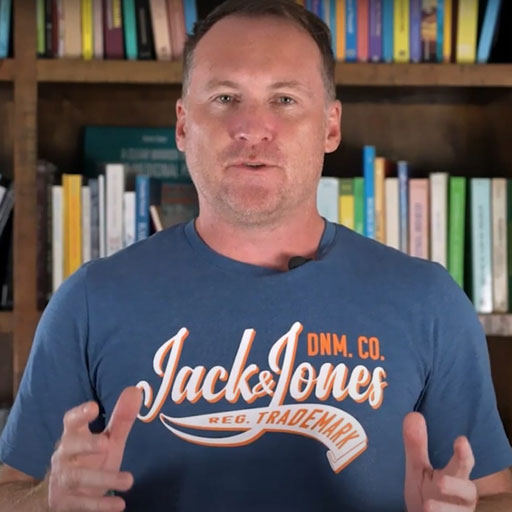
Clayton Kuzma
You may need emotional regulation skills if:
- You go from calm to angry faster than you can explain
- You shut down or go blank during emotional conversations
- You feel a build-up of pressure that you do not know how to release constructively
- You say or do things in conflict you later regret
- Stress at work spills into your behaviour at home
You may notice this showing up in:
- Relationships — conflict, communication breakdown, withdrawal
- Anger — rapid escalation, disproportionate reactions
- Stress — difficulty switching off, irritability, physical tension
- Performance — overthinking, pressure management, decision-making under load
Emotioal Regulation Is a Skill, Not a Personality Trait
Why men often mistake regulation for suppression
The message most men received growing up was simple: control your emotions. Do not show weakness. Stay in charge. This taught a particular approach to emotion — push it down, ignore it, power through.
That is not emotional regulation. That is suppression. And suppression does not work long-term. It stores pressure that eventually comes out — as an explosion, as coldness, as distance, as health problems, or as a relationship slowly falling apart.
Emotional regulation is the opposite of suppression. It means noticing what is happening early, understanding what triggered it, and choosing a response that is proportionate and effective.
Why emotions show up as anger, pressure, or shutdown
Men are often trained to express vulnerability as anger. Frustration, fear, shame, sadness, overwhelm — many of these arrive as irritation, defensiveness, or pressure before they are recognised as anything else.
Shutdown is another common pattern. When the emotional load becomes too much, the nervous system protects itself by going offline — going quiet, withdrawing, stonewalling. This feels protective internally but lands as rejection or abandonment to a partner.
Understanding which pattern applies to you is the first step.
Why awareness alone is not enough
Knowing you have a short fuse or a tendency to shut down does not automatically change the behaviour. Regulation requires practice — developing new automatic responses that replace the old ones. That is what the skills below are designed to do.
What Emotional Dysregulation Looks Like in Men
Anger and snapping
Reacting with intensity disproportionate to the trigger. Snapping at small things. Finding small frustrations escalate quickly. Saying things you regret.
Emotional shutdown or going blank
Withdrawing from conversation. Going quiet during conflict. Feeling your mind go blank when emotional pressure increases. Retreating physically or emotionally until things cool down.
Defensiveness and control
Interpreting feedback as attack. Feeling the need to explain, justify, or defend. Difficulty hearing criticism without reacting. Trying to control situations as a way of managing internal discomfort.
Overthinking and rumination
Replaying conversations. Anticipating criticism. Mental loops that do not resolve. Lying awake going over what happened or what might happen.
Avoidance, numbness, or withdrawal
Staying away from emotionally loaded conversations or situations. Numbing through work, screens, alcohol, or activity. Feeling disconnected without understanding why.
What Emotional Flooding Means
Emotional flooding is what happens when your nervous system becomes so activated that normal thinking, listening, and problem-solving become extremely difficult.
Your heart rate rises. Your thinking narrows. You stop being able to take in new information. You become reactive rather than thoughtful. Your capacity to hear your partner, consider their perspective, or choose a measured response drops significantly.
Research by psychologist John Gottman identifies emotional flooding — particularly in men — as one of the primary drivers of relationship communication breakdown. Men tend to reach the flooding threshold faster than women and take longer to physiologically calm down.
This is not weakness. It is physiology. Understanding it changes the approach from “try harder to stay calm” to “learn to notice the early signs and take effective action before the flood arrives.”
How the body takes over under pressure
Flooding is a stress response. When the nervous system perceives threat — even a social threat like criticism, rejection, or feeling blamed — it activates the same biological cascade as a physical threat. Heart rate increases. Breathing becomes shallow. Muscles tighten. Cognitive function narrows.
Why thinking and listening become harder
At high activation levels, the parts of the brain responsible for nuanced thinking, empathy, and communication become less available. You are operating on a more reactive, protective mode. This is why people say and do things in conflict they would never consider in a calm state.
Why relationship conversations often break down here
If flooding occurs during a difficult conversation, the person who is flooded cannot effectively listen, consider their partner’s perspective, or communicate clearly. The conversation either escalates or shuts down. Neither produces resolution.
Why Men Struggle to Regulate Emotions
Learned suppression
Most men grew up in environments where emotional expression was discouraged or pathologised. The default coping strategy — suppress it, ignore it, push through — becomes automatic. Suppression works short-term and breaks down over time.
Low emotional vocabulary
Recognising and naming emotions accurately is a skill. Most men were not taught it. Without a vocabulary for what is happening internally, it is harder to notice emotions early and harder to communicate about them.
Shame and threat sensitivity
Emotions — particularly sadness, fear, or vulnerability — can feel like weakness or failure for men. This activates a threat response before the emotion is even acknowledged, which accelerates dysregulation.
Stress, fatigue, and overload
Regulation capacity is a limited resource. When you are chronically stressed, sleep-deprived, or running on empty, your capacity to manage emotional states decreases significantly. The same situation that would not bother you when rested can trigger a strong reaction when depleted.
Attachment and relationship triggers
Relationship interactions — particularly around closeness, criticism, rejection, or abandonment — are among the most powerful emotional triggers for men. Attachment styles in men and relationships explain why certain relationship behaviours produce outsized emotional reactions.
Emotional Regulation Skills That Help Men
These skills are drawn from CBT, ACT, and applied nervous system regulation. They are practical and repeatable.
Notice early body cues
Flooding and dysregulation do not arrive without warning. The body gives signals first — tension in the jaw or chest, shallow breathing, increased heart rate, a tightening in the gut. Learning to notice these early is the foundation of regulation.
Practice: At the end of the day, identify one moment where your body signalled emotion before you acted on it. Name it.
Pause before responding
A pause of three to five seconds between trigger and response is enough to interrupt an automatic reaction. You are not suppressing — you are creating space for a different choice.
Practice: When you notice an early cue, pause and take one slow breath before responding. Do this consistently until it becomes the default.
Name what is happening
Labelling an emotion reduces its intensity. Saying to yourself “I’m feeling criticised and I’m getting defensive” is not weakness — it is the fastest path to reducing reactivity in that moment.
Practice: Use the phrase “I notice I’m feeling…” to describe what is happening without acting on it.
Use breathing and grounding strategically
Slow, diaphragmatic breathing activates the parasympathetic nervous system — the physiological opposite of the stress response. It is the most direct physical tool available for reducing activation.
Practice: Four counts in, hold for four, six counts out. Do this for three cycles when you notice escalation beginning.
Take effective time-outs
A time-out is not stonewalling. Stonewalling is withdrawing without communication or return. An effective time-out involves: (1) stating you need a break, (2) giving a timeframe for return, and (3) actually returning.
Practice: Agree with your partner on a time-out signal. Use it proactively before flooding, not after it has already happened.
Repair after dysregulation
What you do after a dysregulated episode matters as much as the episode itself. Acknowledging what happened, taking responsibility for your behaviour, and demonstrating change through follow-through is what builds trust over time.
Emotional Regulation in Relationships
Emotional regulation is not just a personal skill — it directly shapes relationship quality.
Staying present during conflict
When you can regulate your emotional state, you can stay in the conversation. You can hear your partner without immediately feeling attacked. You can think clearly enough to respond rather than react. This fundamentally changes the outcome of relationship conflict.
Listening without defending
Defensiveness is a regulation problem before it is a communication problem. When internal threat levels are high, everything sounds like criticism. Regulation makes space for genuine listening — understanding what your partner is saying before formulating a response.
For practical skills in this area, see The Craft of Relationships Course for Men
Communicating before shutdown
If you can notice the early signs of shutdown — the increasing distance, the mind going quiet, the withdrawal — you have a window to communicate rather than disappear. Saying “I need a few minutes to collect my thoughts” is regulation in action. It keeps you in the relationship rather than abandoning the conversation.
Repairing instead of avoiding
After a difficult interaction, the regulated response is repair — not avoidance, not pretending nothing happened, not waiting for the other person to bring it up. Repair requires emotional regulation to engage with something that was uncomfortable without re-escalating.
Explore The Craft of Relationships Course for structured training in regulation, communication, and repair.
The Craft Of Relationships Course
Explore our structured 6-week online course to improve your communication, emotional intelligence, conflict resolution skills and connection. Australia Wide.
When to Get Support
When anger is affecting others
If your anger is affecting your partner, children, colleagues, or yourself — if it is causing fear, damage to relationships, or you are regularly saying or doing things you regret — professional support is the appropriate next step. See the online anger management course for men or make a direct enquiry for psychology sessions.
When shutdown is damaging the relationship
If emotional shutdown has become your primary response to relationship stress — and your partner is increasingly frustrated, distant, or threatening to leave — this is a serious relationship signal that requires direct attention. Individual relationship counselling can help you understand what is driving the shutdown and develop alternatives.
When stress or mental health is driving dysregulation
Chronic stress, anxiety, depression, burnout, or unresolved trauma can all significantly reduce regulation capacity. If you are struggling to manage emotional states and mental health factors seem to be contributing, online psychology for men Australia provides direct clinical support.
Course and psychology options
For structured skill-building in emotional regulation and communication, The Craft of Relationships Course for Men provides a practical framework. For individual clinical support, contact the practice directly to discuss the right pathway.
Working With Psychology for Men
At Psychology for Men, our programs are structured, evidence-based, and delivered individually by Clayton Kuzma — an AHPRA-registered psychologist on the Sunshine Coast with over a decade of experience working with men.
The programs are self paced, combines individual sessions with structured between-session learning, is grounded in CBT and ACT, and is tailored to the specific patterns driving your anger — not generic content applied uniformly.
Related Resources
Explore our structured online course to improve your communication, emotional intelligence, conflict resolution skills and connection. Australia Wide.
Explore our structured online course to learn how to manage your anger, regulate your emotions, and improve your communication and conflict resolution skills.
Explore our court accepted online anger management course.
Learn more about our psychology services.
Psychology For Men supports men across the Sunshine Coast including Maroochydore, Buderim, Mooloolaba, Caloundra, and Noosa — plus online sessions Australia-wide. If you’re considering anger management and want to work with a registered psychologist who specialises in men’s mental health, we’re here to help.
Frequently Asked Questions
What is emotional regulation for men?
Emotional regulation is the ability to manage internal emotional states before they drive behaviour. For men, it typically means the difference between responding and reacting — staying present in difficult conversations rather than shutting down, snapping, or escalating. It is a learnable skill, not a personality trait, and it directly affects relationships, anger management, and stress.
Why do men struggle with emotional regulation?
Men are often socialised to suppress emotions rather than process them. This creates a default pattern where emotions build under the surface and emerge as anger, shutdown, or avoidance. Low emotional vocabulary, shame about vulnerability, and chronic stress all compound the difficulty. The good news: regulation skills can be learned at any age.
What is emotional flooding?
Emotional flooding is a state of high physiological and emotional arousal where clear thinking, listening, and communication become very difficult. Heart rate rises, cognitive capacity narrows, and the ability to hear or consider another perspective drops significantly. It is one of the primary drivers of relationship communication breakdown and is more common in men than is generally acknowledged.
Why do I shut down during conflict?
Shutdown — going quiet, withdrawing, stonewalling — is a nervous system protective response. When emotional pressure reaches a threshold, the system pulls back to self-protect. It is not weakness, and it is not necessarily a choice in the moment. Understanding the physiology behind it is the first step to developing different responses before the threshold is reached.
Why do I get angry when I feel overwhelmed?
Anger is often the way vulnerability presents in men. Feelings of fear, shame, inadequacy, or overwhelm can arrive as irritability or rage before they are recognised as anything else. The anger is real — but understanding what is underneath it is what produces lasting change.
Can emotional regulation skills be learned?
Yes. Emotional regulation is not fixed. It is a set of skills — noticing body cues, pausing before responding, using breathing and grounding techniques, communicating before shutdown, repairing after episodes. These can be learned and practised until they become reliable habits. Both structured courses and individual psychology are effective pathways.
How does emotional regulation affect relationships?
Regulation capacity directly determines the quality of relationship communication. When men can stay regulated during difficult conversations, they can listen more effectively, express themselves more clearly, and repair after conflict. When dysregulation takes over — through anger, shutdown, or defensiveness — conversations become circular, damaging, or avoided entirely.
What skills help men regulate emotions?
The most effective regulation skills for men include: noticing early body cues before flooding occurs, pausing before responding, labelling the emotion (naming reduces intensity), using slow diaphragmatic breathing, taking structured time-outs, and repairing after dysregulated episodes. These are covered in detail in The Craft of Relationships Course for Men.
When should I get professional help?
Seek professional support when anger is affecting those around you or causing significant regret, when emotional shutdown is seriously damaging a relationship, when stress or mental health factors are driving your dysregulation, or when you have tried to change on your own and the patterns keep returning
What course or service should I start with?
If relationship communication and regulation are the primary issues, start with The Craft of Relationships Course for Men. If anger is the main concern, the online anger management course for men is the more targeted option. For individual clinical support, make a direct enquiry through online psychology for men Australia.
Take the Next Step
Ready to build emotional regulation skills?
The Craft of Relationhsips Course for men includes structured training in emotional regulation, communication under pressure, conflict management, and repair. It is practical, psychologist-designed, and built for men.
If you need individual clinical support — for anger, shutdown, or mental health driving your dysregulation — make a direct enquiry.
Clayton Kuzma | AHPRA-registered psychologist | Maroochydore, Sunshine Coast | Online Australia-wide
The Craft of Relationships Course
Explore our structured 6-week online course to improve your communication, emotional intelligence, conflict resolution skills and connection. Australia Wide.
Need Support?
Psychology For Men is here to help men across the Sunshine Coast and Australia-wide with practical, structured psychology for anger, stress, relationships, and emotional regulation.
Yes — anger management is effective when it uses evidence-based approaches such as Cognitive Behavioural Therapy (CBT) and Acceptance and Commitment Therapy (ACT), and is delivered by a trained psychologist in a structured clinical format. Meta-analyses consistently show that structured anger management programs reduce anger frequency, intensity, and associated behaviours in adults. The key distinction is between clinical, skills-based anger management and generic anger management courses — the former produces measurable, lasting change while the latter typically does not. For men specifically, working with an AHPRA-registered psychologist who tailors the approach to their specific patterns produces the most reliable outcomes.
The Honest Answer — It Depends on the Approach
Most men asking this question have been told to “get anger management” without being told what that actually means — or why some forms of it work and others don’t.
The research is clear: well-delivered, evidence-based anger management produces significant, measurable change. The caveat is the word “well-delivered.” A court-mandated weekend group session and a structured 6–8 week individual program delivered by a registered psychologist are both technically “anger management.” They produce very different results.
This distinction matters because many men who are sceptical about anger management have already tried a version of it — a course, a group program, a self-help approach — that didn’t produce lasting change. Their scepticism is often entirely reasonable given what they actually experienced. The question worth asking is whether the approach that didn’t work was the right one — not whether anger management as a category is effective.
What the Research Says
The evidence base for anger management is substantial. The most comprehensive review — a meta-analysis of 96 studies by DiGuiseppe and Tafrate (2010) — found that the average person receiving anger treatment improved more than 76% of untreated control participants across measures including anger frequency, anger intensity, anger duration, and aggressive behaviour.
Other key findings from the research:
- CBT-based anger management programs consistently produce significant reductions in anger across a wide range of populations and settings
- ACT-based approaches show comparable outcomes, with additional benefits in psychological flexibility and emotional regulation capacity
- Individual treatment produces stronger outcomes than group treatment, particularly for complex presentations
- The quality and training of the therapist is a significant predictor of outcome — not all providers produce equivalent results
- Gains from structured, evidence-based programs are typically maintained at follow-up, with many studies showing continued improvement after treatment ends
What the research also shows is that the gains are not automatic. They require consistent engagement — showing up to sessions, applying the skills between sessions, and doing the work when it would be easier not to.
CBT for Anger — What the Evidence Shows
Cognitive Behavioural Therapy is the most extensively researched psychological treatment for anger. Its application to anger management works at two levels: the cognitive (the patterns of thinking that accelerate reactions) and the behavioural (the habitual responses that play out when anger is triggered).
CBT for anger consistently produces:
- Reductions in the frequency and intensity of anger episodes
- Improvements in the ability to regulate emotional responses under provocation
- Reductions in aggressive behaviour, verbal and otherwise
- Improvements in relationship quality and communication
- Changes in the interpretation of situations that were previously triggering reliably
Effect sizes in the research are typically in the moderate-to-large range — meaningful and clinically significant.
ACT for Anger — The Psychological Flexibility Evidence
ACT-based approaches to anger management target the same mechanism as CBT but from a different angle. Rather than changing the content of reactive thoughts, ACT changes the relationship between thoughts and behaviour — developing the psychological flexibility to respond from values rather than from emotion.
Research on ACT for anger and emotional regulation consistently shows:
- Significant reductions in experiential avoidance — the suppression and escape behaviours that maintain anger patterns long-term
- Improvements in psychological flexibility — the ability to stay engaged with difficult situations without automatic reactive behaviour
- Better outcomes on long-term follow-up than suppression-based approaches
- Specific benefits for men whose anger is driven by fusion with rigid interpretations of situations
The two approaches are often used together in clinical practice — and evidence suggests the combined approach outperforms either alone.
Why Some Anger Management Doesn’t Work
Understanding why certain approaches fail is as useful as understanding what works.
Generic Group Programs Without Clinical Structure
Many anger management programs — particularly those mandated by courts or run through community organisations — use group formats with non-clinically trained facilitators and generic content. These programs may provide useful psychoeducation. They rarely produce lasting behavioural change.
The reasons: generic content doesn’t address individual patterns, group formats reduce the intensity and personalisation of the work, and non-clinical facilitators can’t identify and address the specific psychological drivers maintaining the anger in a given individual.
Willpower-Based Approaches
Approaches that frame anger management as a matter of trying harder, exercising more self-control, or thinking positively are not evidence-based and don’t produce durable change. The nervous system doesn’t respond to willpower. Suppression — trying to hold the anger down — maintains physiological arousal rather than reducing it and is associated with worse long-term outcomes.
Addressing Symptoms Without the Underlying Pattern
Giving a man coping techniques without understanding what’s driving the pattern is like putting a bandage on a structural problem. The techniques may help in specific moments, but without understanding the trigger structure, the interpretation patterns, the physiological escalation sequence, and the behavioural habits — the overall pattern remains intact.
One-Off or Insufficient Duration
Behavioural change requires repetition. A single-day course or a handful of sessions is rarely sufficient to produce reliable change under real pressure — the conditions in which the anger pattern has been most practised. Effective anger management typically runs over 6–8 weeks minimum.
→ What is anger management and how does it work
What Makes Anger Management Effective
The research points consistently to a set of factors that distinguish effective from ineffective anger management:
1. Evidence-based therapeutic approach CBT and ACT are the two most well-supported approaches for anger. Programs that use these frameworks produce significantly better outcomes than programs that don’t.
2. Individual format Individual sessions allow the work to be tailored to the specific triggers, patterns, and history of the individual man. Generic group programs can’t do this.
3. Qualified clinical delivery An AHPRA-registered psychologist has the training to assess, conceptualise, and treat complex anger presentations in ways that unregistered providers cannot. This is also why documentation from a registered psychologist carries more weight in legal contexts.
4. Sufficient duration Effective anger management takes time. 6–8 weeks minimum for a structured program that produces durable change.
5. Active engagement between sessions The change happens in the life between sessions — in the moments when the trigger fires and the skill is (or isn’t) applied.
6. Addressing the full picture Effective work addresses the physiological response (nervous system regulation), the cognitive patterns (interpretation, rumination, catastrophising), the behavioural habits, and the relational context.
Realistic Expectations — What Changes and What Doesn’t
What typically changes:
- The window between trigger and reaction widens — the impulse may still be there; the automatic expression slows
- The intensity of reactions reduces — situations that previously produced a full reaction begin producing a more proportionate response
- Recovery is faster — after a moment of anger, return to baseline happens more quickly
- Regret decreases — men describe leaving difficult conversations with less shame and more self-respect
- Relationships improve — as communication patterns change, the relational dynamic shifts, often significantly
What doesn’t automatically change:
- The underlying stressors — anger management builds skills for managing anger, not the work pressure or relationship dynamics contributing to the load
- Historical patterns and attachment templates — these change over time with consistent work, but not rapidly
- The fact that anger is still felt — the goal was never to stop feeling angry; anger is a normal emotion
Timeframe: Most men begin to notice meaningful change within 6–8 weeks of consistent, structured work. The changes may be subtle at first — a conversation that didn’t escalate, a moment of pausing that didn’t happen before. Over time, the consistency builds.
“I’ve Tried Before and It Didn’t Work” — Why That Might Be
This is one of the most common things men say when considering anger management — and it’s worth taking seriously rather than dismissing.
When anger management hasn’t worked, the reasons are usually one or more of the following:
- The approach wasn’t evidence-based — generic content, untrained facilitator, no individual tailoring
- The duration wasn’t sufficient — a short course that provided awareness but not enough practice for skills to consolidate
- The work was done under external pressure only — court-mandated attendance without genuine engagement produces attendance, not change
- The underlying drivers weren’t addressed — surface behaviour was targeted without understanding what was maintaining it
- It was the right approach at the wrong time — sometimes acute crisis, substance use, or relationship deterioration make consolidation impossible until those are addressed first
If previous attempts haven’t produced lasting change, that’s not evidence that anger management doesn’t work for you. It’s evidence that the previous approach wasn’t the right one.
→ Signs you need anger management → Anger management on the Sunshine Coast
What to Look For in an Anger Management Approach
Markers of an effective approach:
- AHPRA-registered psychologist — formal clinical training in assessment and treatment
- Evidence-based framework — CBT and/or ACT explicitly named
- Individual sessions — not primarily group-based
- 6–8 weeks minimum — sufficient duration for skills to consolidate
- Structured between-session work — skills applied in daily life, not just discussed in sessions
- Tailored to your specific patterns — not generic content
- Medicare rebates available — registered psychologist with MHTP referral
What to be cautious of:
- Programs promising rapid results from minimal engagement
- Online courses with no live clinical contact
- Group programs where your specific pattern is never individually assessed
- Providers who cannot clearly explain the evidence base of their approach
Working With Psychology for Men
At Psychology for Men, the anger management program is structured, evidence-based, and delivered individually by Clayton Kuzma — an AHPRA-registered psychologist on the Sunshine Coast with over a decade of experience working with men.
The program runs over 6–8 weeks, combines individual sessions with structured between-session learning, is grounded in CBT and ACT, and is tailored to the specific patterns driving your anger — not generic content applied uniformly.
It is also:
- Accepted by Australian courts for DV-mandated programs and family court matters
- Eligible for Medicare rebates with a valid Mental Health Treatment Plan
- Available in person in Maroochydore and online across Australia
The research says anger management works. The distinction is whether the approach is the right one.
→ The anger management program for men → Court-accepted anger management Sunshine Coast
Frequently Asked Questions
Q: Does anger management actually work for men? Yes — evidence-based anger management, delivered by a qualified clinician in a structured individual format, produces significant and lasting reductions in anger frequency, intensity, and aggressive behaviour in men. The research base is extensive, with meta-analyses covering thousands of participants consistently showing meaningful outcomes. The critical variable is the quality and clinical grounding of the approach, not anger management as a category.
Q: How long does anger management take to work? Most men begin to notice meaningful change within 6–8 weeks of consistent, structured work. Initial changes typically appear as a widening of the window between trigger and reaction — the impulse is present, but the automatic expression slows. Full consolidation of skills under pressure typically takes longer and varies by person. The work continues after formal sessions end — skills need real-world application to become reliable.
Q: What’s the difference between anger management that works and anger management that doesn’t? The key factors: evidence-based approach (CBT and/or ACT), individual format, qualified clinical delivery (AHPRA-registered psychologist), sufficient duration (6–8 weeks minimum), and active engagement between sessions. Generic group programs, willpower-based approaches, and short-duration courses consistently underperform on research outcomes compared to structured clinical programs.
Q: Is anger management the same as therapy? They’re related but distinct. Therapy is a broad term for structured psychological support across a range of issues. Anger management specifically refers to a structured, outcome-focused process targeting anger, emotional regulation, and related behaviour patterns. Anger management can be delivered as part of therapy, but it has its own structure, timeframe, and specific outcome focus. Sessions are more directive and skills-focused than general therapy.
Q: Can anger management work if I don’t think I have a serious problem? Yes — most men who complete anger management don’t have a diagnosis or a “serious problem” in the clinical sense. They have a pattern that’s costing them in their relationships, their work, or their sense of self-respect — and they want to change it. The research shows consistent benefit across a wide range of severity levels. The bar for benefit isn’t a crisis. It’s a gap between how you respond and how you want to respond.
Q: What if I’ve tried anger management before and it didn’t work? Previous approaches that didn’t produce lasting change usually failed for specific, addressable reasons: the approach wasn’t evidence-based, the duration was insufficient, or the work wasn’t individually tailored. A structured, individually delivered CBT and ACT program with a registered psychologist is a meaningfully different experience from a generic group course. If previous attempts didn’t work, that’s information about the approach — not a verdict on whether change is possible.
Q: Is anger management available online? Yes. The anger management program at Psychology for Men is available online via telehealth across Australia, following the same structured format as in-person sessions. Research on telehealth delivery of CBT and ACT-based programs shows equivalent outcomes to in-person delivery. Medicare rebates apply with a valid Mental Health Treatment Plan.
Take the Next Step
The research is consistent. Structured, evidence-based anger management delivered by a qualified clinician works — measurably, reliably, and with changes that hold over time.
The question isn’t whether anger management works. It’s whether you’re using the right version of it.
If you’re on the Sunshine Coast or anywhere in Australia, Psychology for Men offers structured, individually delivered anger management grounded in CBT and ACT. Sessions are available in person in Maroochydore and online.
[Make a Booking Enquiry] [Learn About the Program]
→ What is anger management for men → Emotional regulation for men → Psychological flexibility and anger
Last reviewed: May 2026 | Written by Clayton Kuzma, Registered Psychologist (AHPRA), Psychology for Men, Sunshine Coast